
Active & Slow Travel
Niigata rewards travellers who move through it, not just between stops.
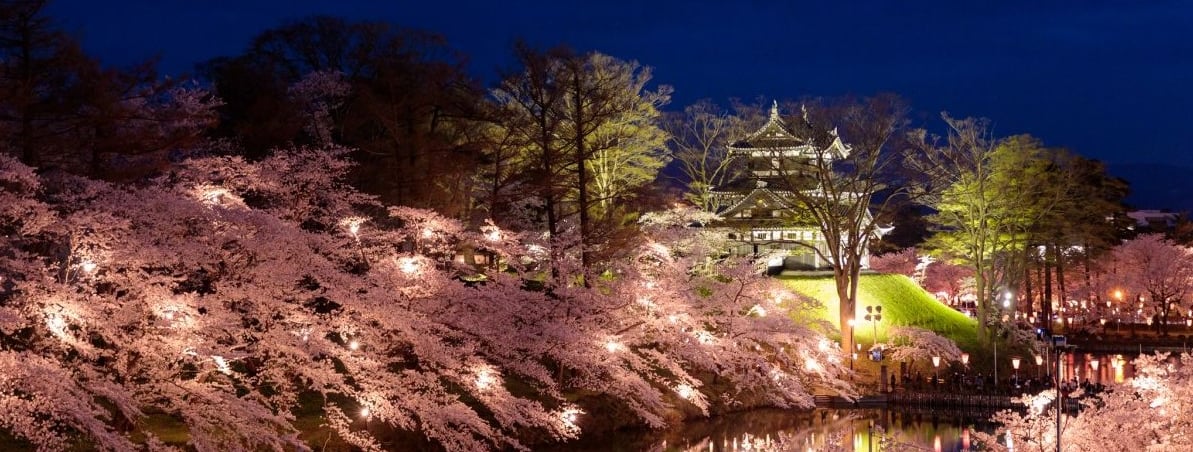
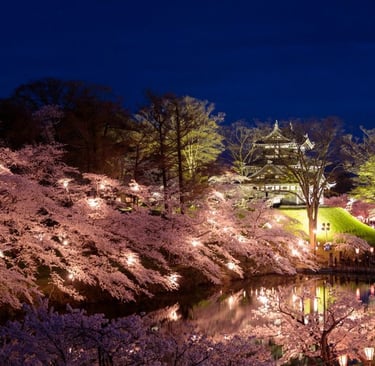
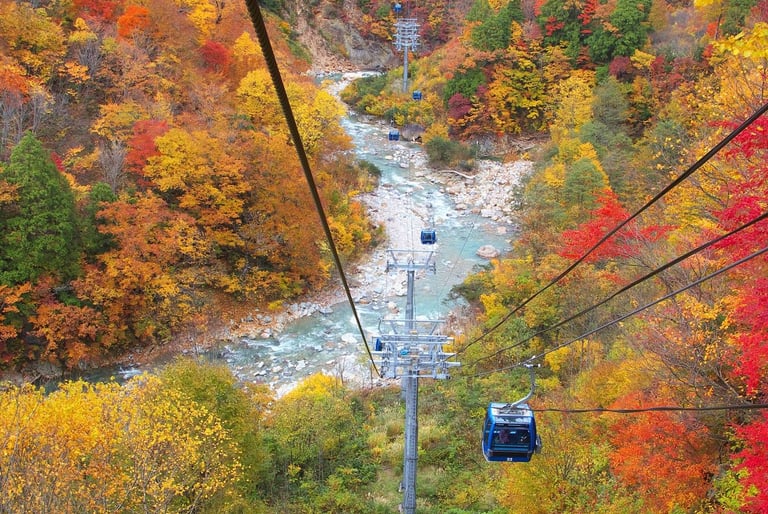
Sado Island offers some of Japan’s most rewarding cycling, with quiet coastal roads and fishing villages unfolding at a human pace. In the mountains, Myoko Kogen and the Naeba highlands provide hiking, alpine walks, and scenic gondola access in warmer months. Across snow country, rural cycling routes pass through rice fields, villages, and landscapes shaped by centuries of agriculture.
Myoko Kogen & Lotte Arai
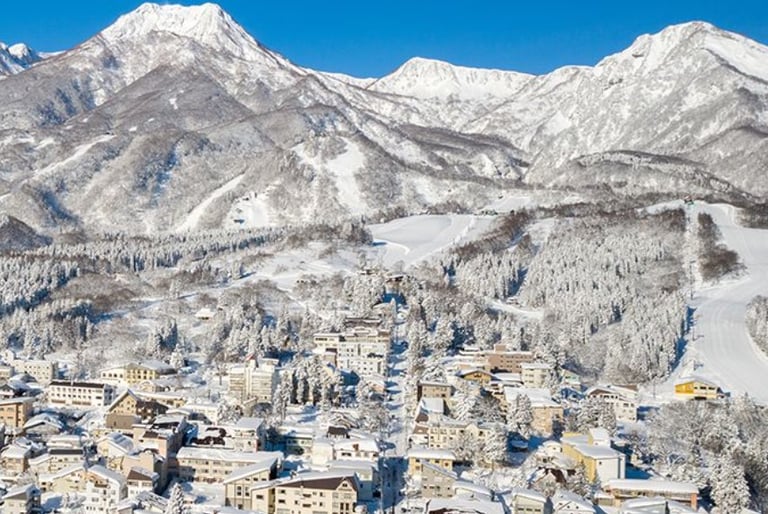
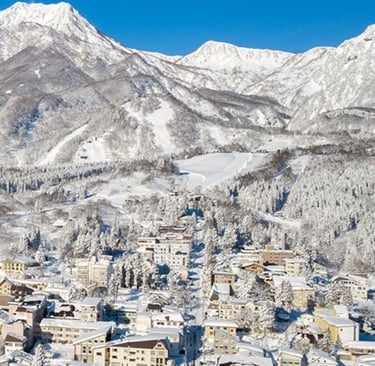
Bordering Nagano, Myoko Kogen is a four-season alpine region renowned for deep powder snow, traditional mountain villages, and a slower, more natural pace than many Japanese resort areas.
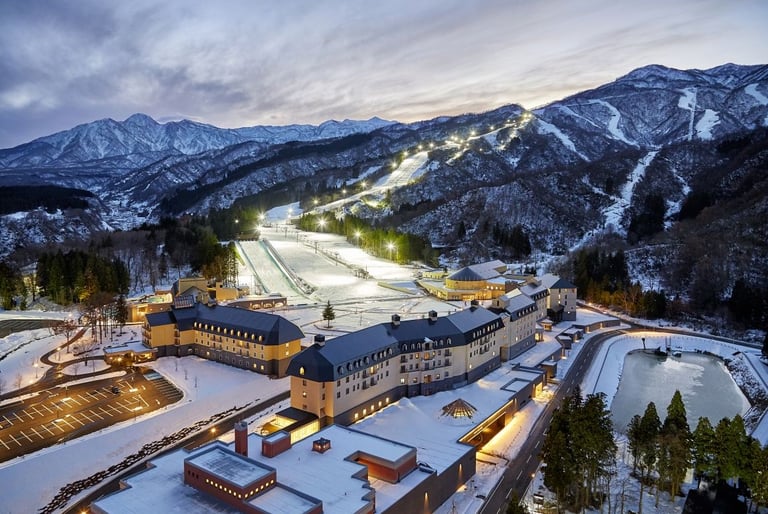
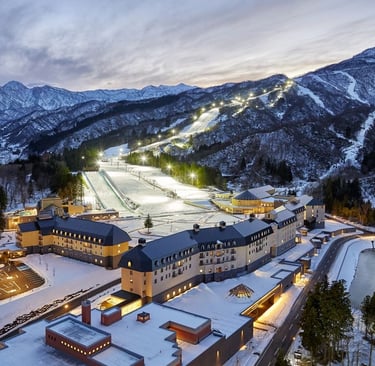
Nearby Lotte Arai Resort represents a more contemporary mountain experience, offering wide terrain, modern facilities, and year-round activities ranging from skiing and snowshoeing to hiking and outdoor adventure experiences in the warmer months. The combination of Myoko’s traditional charm and Arai’s modern resort style provides excellent flexibility for different travel styles.
Niigata’s Food & Regional Specialties
Niigata’s cuisine reflects its fertile land, clean water, and strong seasonal identity.
Signature dishes and products include:
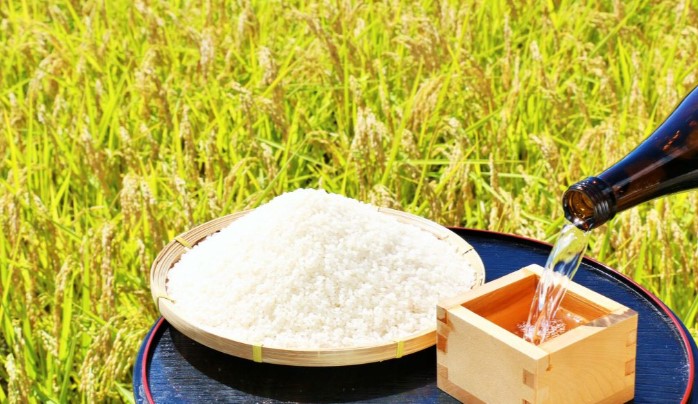
Koshihikari rice – regarded as Japan’s finest rice
Niigata sake – clean, refined styles from over 90 breweries
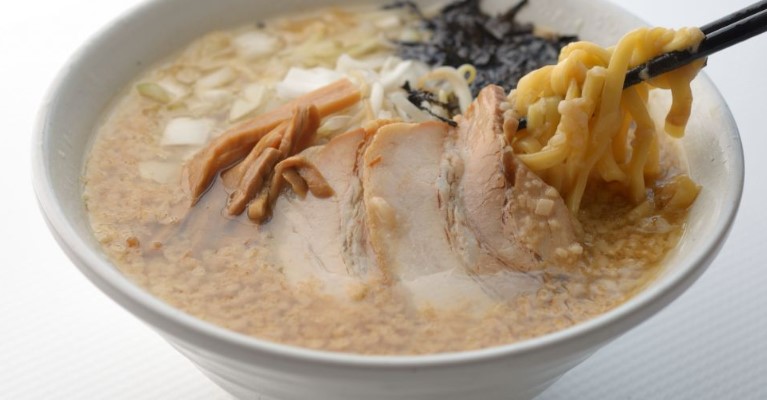
Hegi-soba – buckwheat noodles served in wooden trays with a distinctive texture
Noppei-jiru – a hearty local vegetable and seafood stew
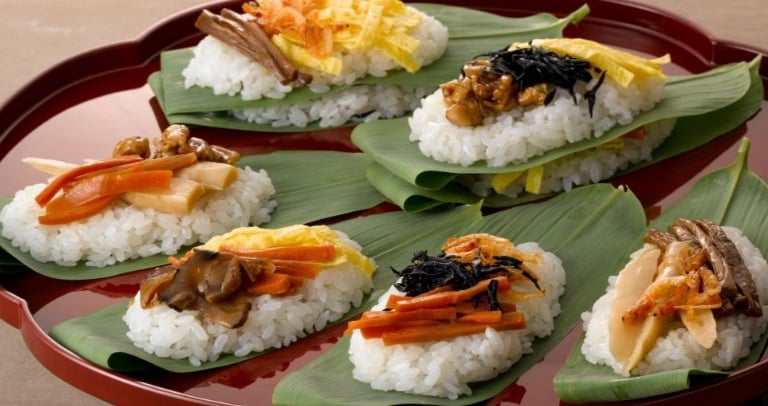
Sasa-dango – sweet rice dumplings wrapped in bamboo leaves
Fresh Sea of Japan seafood, including sweet shrimp, squid, and snow crab
Food in Niigata is honest, seasonal, and deeply connected to place.


🚄 1. From Tokyo to Niigata
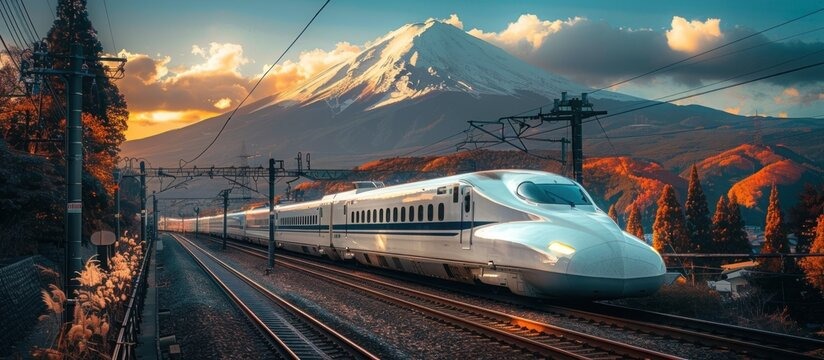
🚅 Shinkansen (Bullet Train) — Fastest & Most Convenient
Route: JR Joetsu Shinkansen from Tokyo Station (and some services from Ueno Station) directly to Niigata Station.
Travel Time:
• Fastest “Toki” trains: ~ 1 hr 40 min – 2 hr.Frequency: Roughly every 30 – 60 min most of the day.
Convenience: Spacious trains with reserved or non-reserved seating and easy luggage space.
Tip for Tourists: Consider the JR East Pass (Nagano/Niigata area) if you plan side trips (e.g., Echigo-Yuzawa, Nagano) or multiple JR rail journeys — you can reserve seats at no extra cost and it often saves money.
✨ Why travelers choose this: Fast, scenic, super reliable, and delivers you right into the heart of Niigata City with great onward connections.
✈️ Plane (from Tokyo)
Route: Fly from Narita Airport to Niigata Airport (followed by a short shuttle/train to Niigata Station).
Flight Time: ~ 1 hr.
Pros: Good for travellers catching a flight already or with airline points.
Cons: Add airport transfers (~1 – 1.5 hrs total on ground), so often similar total time to shinkansen.
🚌 Highway Bus (Budget Option)
From: Tokyo (departures around Ikebukuro, Shinjuku) to Niigata Station Bus Terminal.
Duration: ~ 5 – 5.5 hrs.
Cost: Generally cheaper than shinkansen (~3,000 – 8,000 yen depending on operator and seat type).
Best For: Travelers on a budget who don’t mind a longer journey.
Note: Some overnight options are available to maximise sightseeing days.
🚄 2. From Osaka to Niigata
🚅 Shinkansen via Tokyo
The most straightforward rail route from Osaka to Niigata combines:
Tokaido Shinkansen from Shin-Osaka → Tokyo
Then Joetsu Shinkansen from Tokyo → Niigata.
Total Rail Travel Time: ~ 5 hrs (standard bullet train connection).
Booking Tip: You can book a through ticket or separate legs; reserved seats are recommended during peak travel seasons.
✈️ Plane
Depending on flight schedules, flying from Osaka (Kansai or Itami) to Niigata Airport can be an efficient alternative:
Flight Time: ~ 1 hr.
Pros: Less travel time overall compared with rail, often competitive pricing.
Cons: Airport transfers on both ends add time and cost — check total journey timing before booking.
🚌 Long-Distance Express Bus
Route: Direct buses from Osaka/Kyoto → Niigata Station Bus Terminal.
Duration: ~ 9 – 10 hrs.
Best For: Very budget-conscious travellers or overnight bus travellers who want to save on hotel costs.
🎟️ Rail Passes & Ticket Tips (Tourist Friendly)
JR East Pass (Nagano/Niigata Area)
Valid for unlimited JR travel (incl. shinkansen) in the Nagano and Niigata regions and between Tokyo and Niigata.
Great value if you’re doing multiple rail trips (e.g., Tokyo ↔ Niigata + around prefecture stops).
Pass has a 5-day consecutive validity and must be purchased before arrival or as a voucher and exchanged in Japan.
💡 Note: Standard Japan Rail Pass also covers the route, but regional passes can be much cheaper for short trips focused on one region
Niigata Prefecture 新潟県
Snow Country, Sake & the Art of Slow Japan
Niigata Prefecture (新潟県) stretches along the Sea of Japan, where mountains, rivers, and heavy snowfall have shaped a culture of resilience, craftsmanship, and quiet refinement. Famous for Japan’s finest rice and sake, restorative hot springs, and dramatic seasonal landscapes, Niigata offers a deeper, more contemplative side of travel in Japan.
Easily reached from Tokyo yet refreshingly uncrowded, Niigata is ideal for travellers seeking nature, food, wellness, and movement — without rushing between highlights.
Five Ways to Experience Niigata
Culture & Living Heritage
Niigata’s culture is inseparable from its land. Long winters and fertile plains have shaped traditions that feel authentic and enduring.
Wander riverside neighbourhoods in Niigata City, explore the historic gold mines and performing arts of Sado Island, or step inside the elegant estate of the Northern Culture Museum, a window into the wealth once generated by rice cultivation. In rural snow country towns, seasonal customs and local rhythms remain very much alive.
Nature & Landscapes
Niigata’s scenery is quietly spectacular, changing dramatically with the seasons.
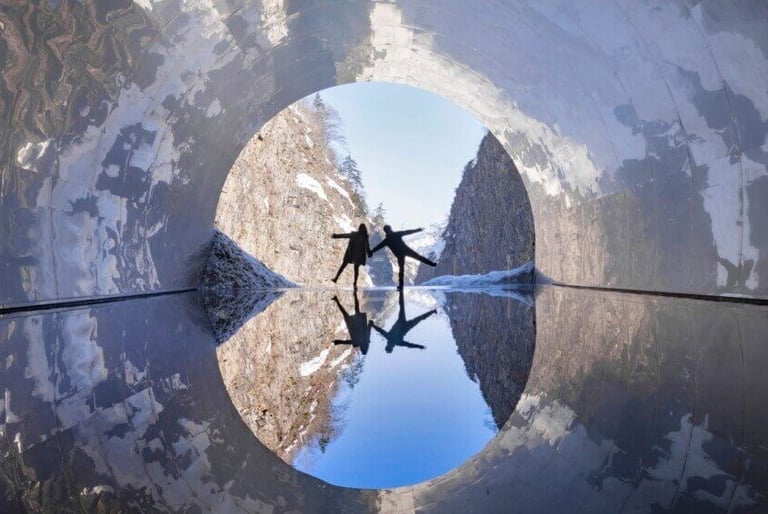
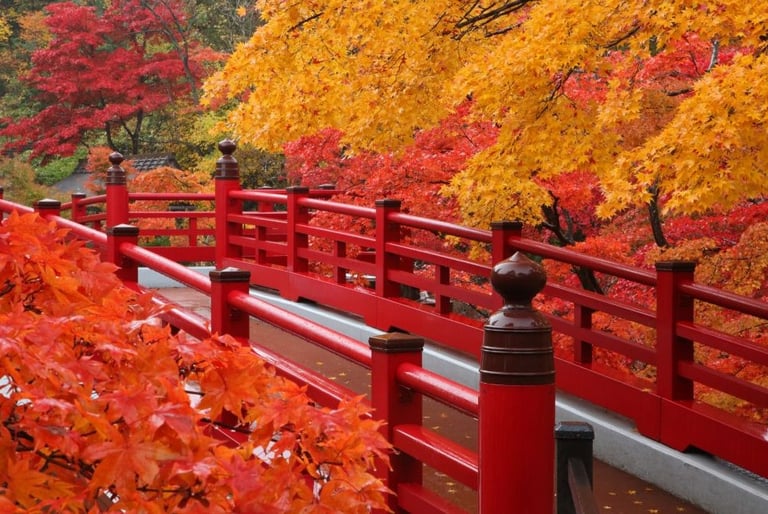
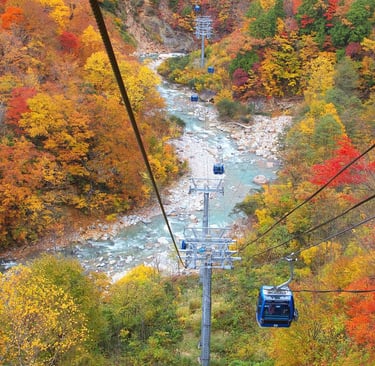
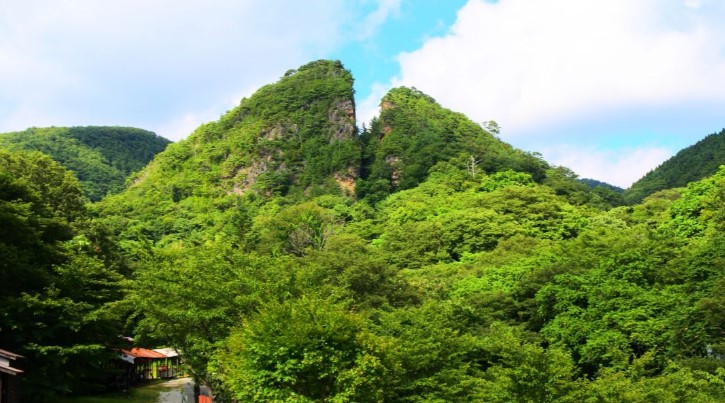
Kiyotsu Gorge, one of Japan’s great gorges, offers a striking blend of raw geology and contemporary design, especially beautiful during autumn foliage and winter snow. Myoko Kogen delivers wide alpine views, forests, and wetlands, while the Sea of Japan coastline reveals fishing villages, rugged shores, and unforgettable sunsets. Across Uonuma and Tokamachi, rice fields and terraces form some of Japan’s most iconic rural landscapes.
Onsen & Wellness
Niigata is a region to slow down and soak.
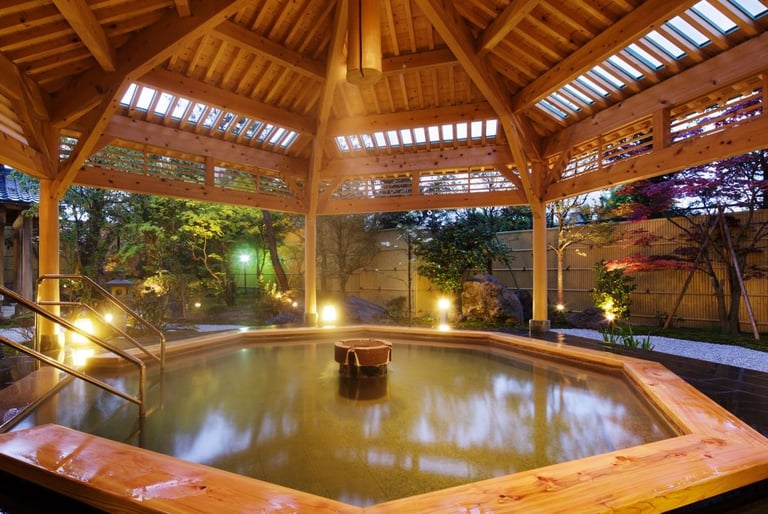
Snow country towns such as Echigo-Yuzawa combine hot springs with mountain scenery and sake culture, while Tsukioka Onsen is known for its luminous green sulphur waters and refined ryokan stays. Along the coast, Senami Onsen pairs open-air baths with sea views at sunset. Whether after activity or contemplation, Niigata’s onsen offer genuine restoration.
Food, Rice & Sake
Few regions in Japan are as closely associated with food quality as Niigata.
Home to Koshihikari rice, considered Japan’s benchmark variety, Niigata also boasts more than 90 sake breweries producing clean, elegant styles shaped by pure mountain water. Local cuisine highlights seasonal seafood from the Sea of Japan, mountain vegetables, and specialties such as hegi-soba, buckwheat noodles served in wooden trays. Dining here is honest, seasonal, and deeply satisfying.
Our Top Destinations in Niigata
Niigata City
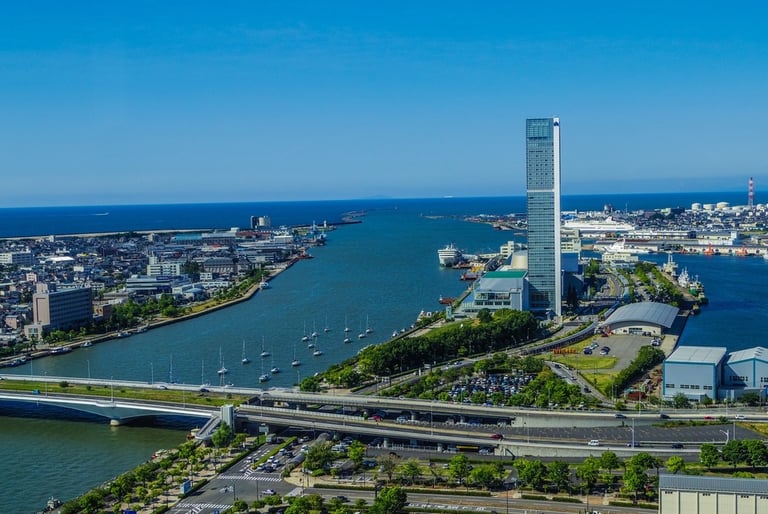
A relaxed coastal capital and natural gateway to the prefecture. Niigata City offers riverfront walks along the Shinano River, lively food markets, excellent seafood and sake bars, and cultural museums that reflect the region’s agricultural and maritime heritage. It is also the main departure point for ferries to Sado Island.
Echigo-Yuzawa & Naeba
The heart of Niigata’s famed snow country.
Echigo-Yuzawa blends traditional onsen culture with superb transport access, making it one of Japan’s easiest mountain escapes from Tokyo. Ryokan stays, outdoor hot springs, and sake tasting experiences define the atmosphere.
Nearby, Naeba adds scale and four-season appeal. Known for expansive alpine scenery, long gondola rides, and extensive winter sports terrain, Naeba also shines outside winter with summer hiking, green-season mountain walks, and autumn foliage. Each July, it becomes the international stage for the Fuji Rock Festival, adding a unique cultural dimension rarely found in alpine regions.
Together, Echigo-Yuzawa and Naeba offer an ideal balance of comfort, scenery, and activity.
Sado Island
A destination in its own right, Sado Island feels distinctly removed from mainland Japan. Highlights include historic gold mines, rugged coastlines, fishing villages, traditional performing arts, and quiet rural landscapes. With its relaxed pace and strong cultural
identity, Sado is ideal for travellers seeking immersion and space to slow down.
Niigata Through the Four Seasons
Winter (Dec–Feb)
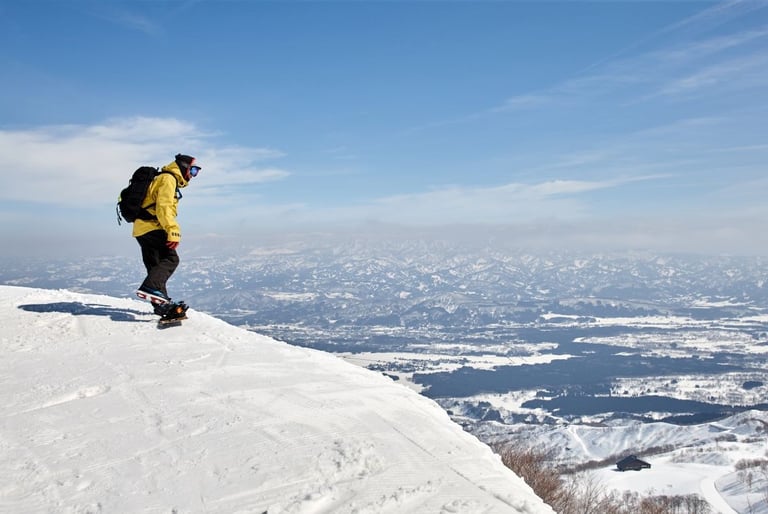
Deep snow transforms Niigata into one of Japan’s great winter landscapes. Skiing and snowboarding flourish in Echigo-Yuzawa, Naeba, Myoko, and Arai, while onsen stays offer warmth and relaxation amid snow-covered scenery.
Spring (Mar–May)
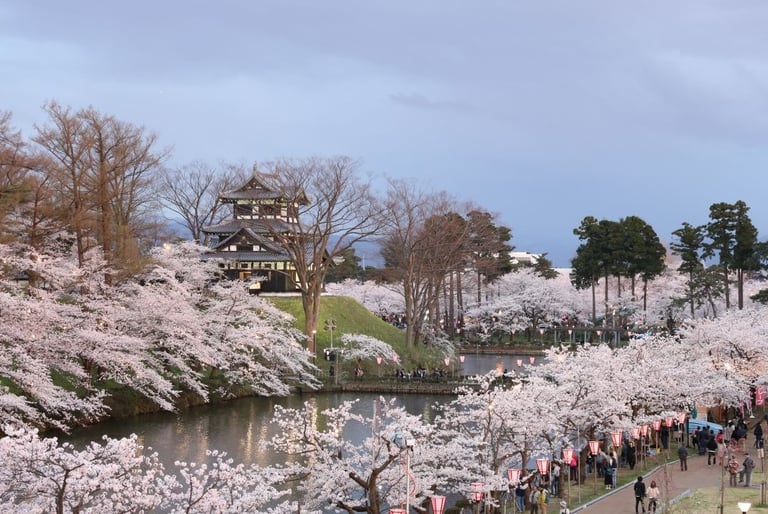
As snow melts, cherry blossoms appear in cities and countryside alike. Rivers swell with meltwater, rural landscapes re-emerge, and it’s an excellent time for gentle walking, cultural exploration, and seasonal cuisine.
Summer (Jun–Aug)
Green mountains, alpine walks, cycling routes, and festivals define summer. Coastal areas come alive, Naeba hosts the Fuji Rock Festival, and Sado Island is ideal for outdoor exploration and cycling.
Autumn (Sep–Nov)
Niigata’s mountains glow with autumn foliage, rice fields turn gold, and harvest season brings some of the region’s best food and sake. This is one of the most rewarding times to visit for scenery and cuisine.
Accessing Niigata
Get in Touch
Go Japan provides travel consultancy services and connects clients with licensed Japanese travel operators.
© 2026 Go Japan. All Rights Reserved.
Photos, images and brand logos are credited to their respective owners.